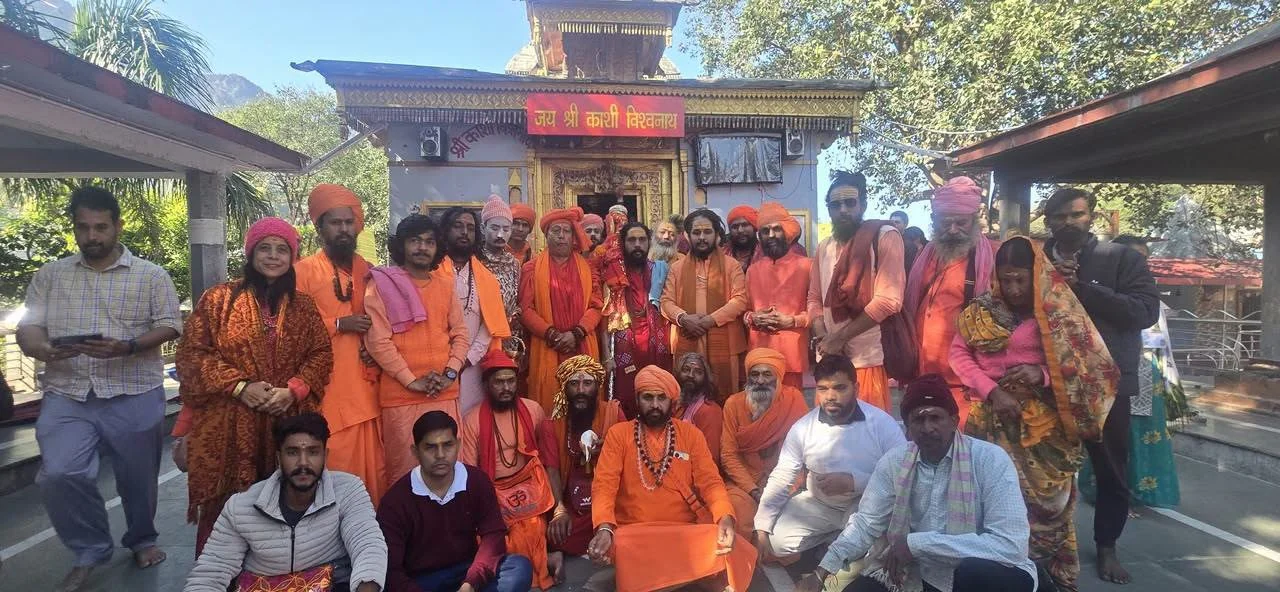
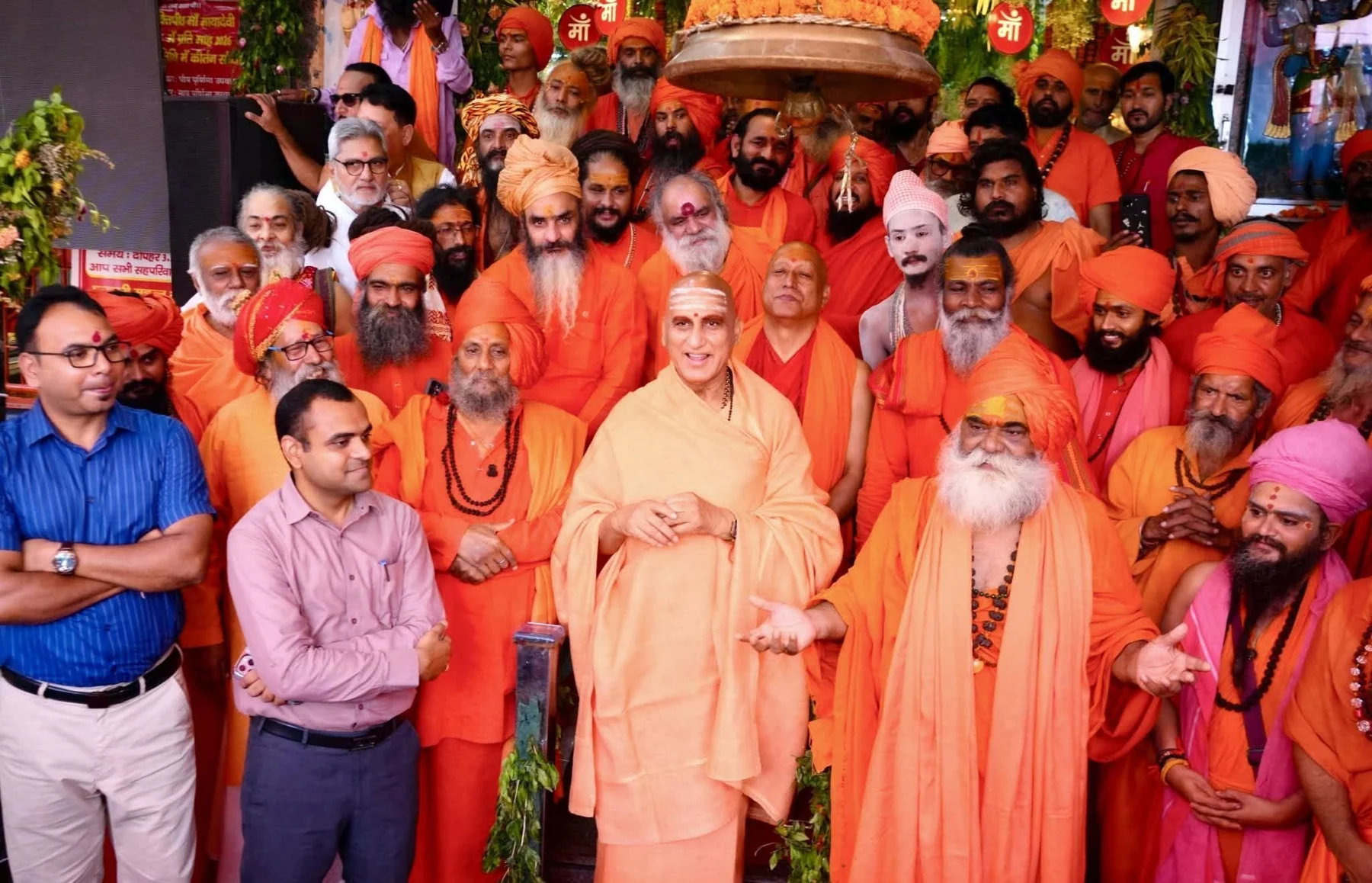
Guruji & Juna Akhara
The tradition,
lived daily.
With respect for the people and the tradition that have become part of my life.

My Guruji
Shree Mahant Aakash Giri Maharaj
Shivani’s Guruji, a Naga Baba, from whom she received her first formal diksha.
Guruji · Shared by Shivani
Text and photographs shared by Shivani.
Juna
Akhara.
Juna Akhara, formally known as Shri Panch Dashnam Juna Akhara, is one of the principal monastic orders of Sanatan Dharma and the largest order of Naga Sadhus. Rooted in the Shaivite tradition, its spiritual life is centred on Lord Shiva, renunciation and the pursuit of liberation.
The Akhara traces its spiritual lineage to ancient traditions associated with Bhagwan Dattatreya and the great philosopher and renunciate Adi Shankaracharya, who is traditionally credited with organising the Dashnami order of sannyasis. The word Juna means “old” or “ancient”, reflecting the antiquity of the tradition. Its Naga Sadhus historically combined intense spiritual discipline with the duty of protecting sacred places and fellow ascetics.
Today, Juna Akhara remains a living tradition, not simply a relic of India's spiritual past. Its sadhus continue their practices of renunciation, devotion, austerity and guru-disciple transmission, gathering in great numbers during the Kumbh Mela, where their processions and sacred bathing ceremonies form an integral part of one of Hinduism's largest spiritual gatherings.
To understand Juna Akhara is to look beyond its striking outward appearance and glimpse a path in which worldly identity is surrendered in the pursuit of something greater: a life dedicated to Shiva, spiritual discipline and the timeless traditions of Sanatan Dharma.